Rodney Sullivan, executive director of the Mayo Center of Asset Management, says an emerging AI-driven productivity boom could lift corporate margins and broaden stock market gains beyond a narrow group of technology leaders.
A new policy statement from the Financial Economists Roundtable, co-written by UVA Darden Professor Marc Lipson, says expanding access to private capital markets could benefit long-term retail investors, but carries “significant risks.” The statement proposes ways investors, intermediaries and regulators could address some of the concerns.
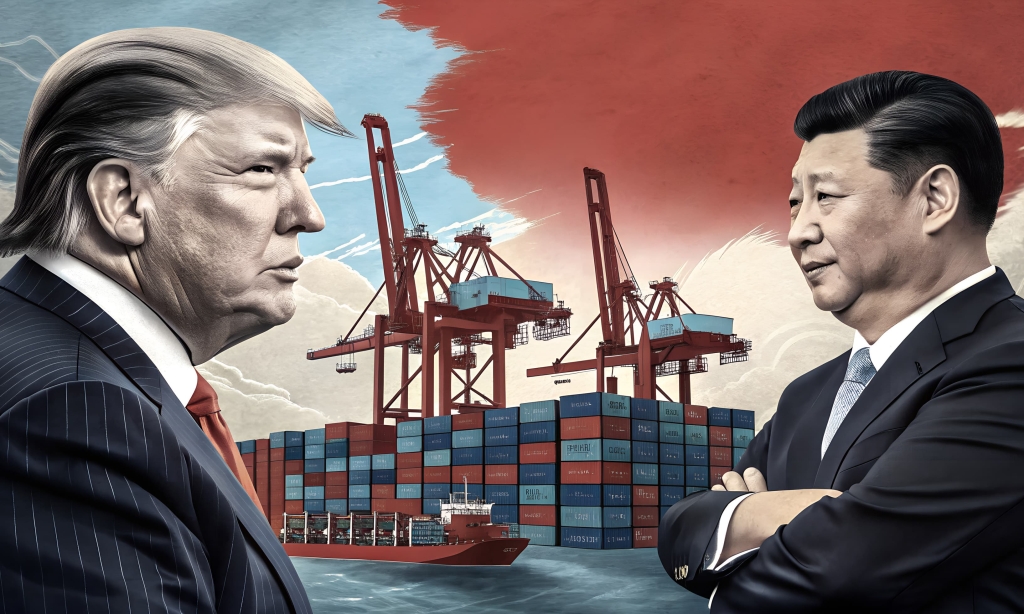
What if economists are looking at President Donald Trump’s trade war all wrong? In a new case, UVA Darden Professor Peter Debaere argues that Trump’s tariffs are better understood not through a lens of economic policy, but of political power.
In a conversation with UVA mathematician Ken Ono, Darden economist Anton Korinek warns the world may be just months away from an “AI takeoff” — a moment when advanced AI systems begin creating even more intelligent successors, threatening white-collar jobs and reshaping the global economy.
When Federal Reserve officials speak, markets listen — and billions of dollars move. Two new cases from UVA Darden Professor Bo Sun help students decode the high-stakes language of central banking.
During the first U.S.-China trade war, much of the focus was on tariffs — taxes placed on goods traded between the countries. But a new paper co-authored by UVA Darden professor Felipe Saffie reveals a lesser-known, powerful force: the country’s giant state-owned enterprises (SOEs).
In his last lecture to the Executive MBA class of 2025, Professor Dan Murphy encourages leaders to move beyond simple stories that seem aligned with individual values and perspectives and to wrestle with the real-world complexities and tradeoffs found in economics, leadership and society.
Artificial general intelligence may arrive within five years. If the predictions are right, says UVA Darden economist Anton Korinek, it's already “crunch time” for organizations and individuals.
KF* is a tool developed by economists at UVA Darden to estimate the natural level of capital inflows a country should expect to receive. By comparing actual inflows to this benchmark, KF* helps spot early signs of financial risks, like “sudden stops,” and gives policymakers and investors a clearer read on the stability of capital flows.

The 2025 “Economic Report of the President,” released in January, extensively cites the research of Francis E. Warnock, the James C. Wheat Jr. Professor of Business Administration at the University of Virginia Darden School of Business.